Wood never stops moving. It takes on moisture when the air is humid and gives it up when the air is dry. For guitar players in Spokane and the Inland Northwest, that matters, because our dry climate and long heating season are hard on instruments. Here's what to watch for and how to protect your guitar.
What humidity should a guitar be kept at?
Most guitar makers recommend about 45 to 55 percent relative humidity. Solid-wood acoustic guitars are the most sensitive. Laminate acoustics and solid-body electrics are more forgiving, but their necks and fretboards still move.
The real damage comes from long dry spells and fast changes, like a guitar going from a humid summer straight into a heated winter house.
Why are Spokane winters hard on guitars?
Spokane has a dry climate to begin with. In winter, cold outdoor air holds very little moisture. When it's heated indoors, the relative humidity drops even further. Forced-air furnaces, wood stoves and baseboard heat all dry a house out.
That's why late fall and winter are when sharp fret ends, sudden buzz and cracked tops show up most often.
What happens when a guitar gets too dry?
| Sign | What's happening | Fix |
|---|---|---|
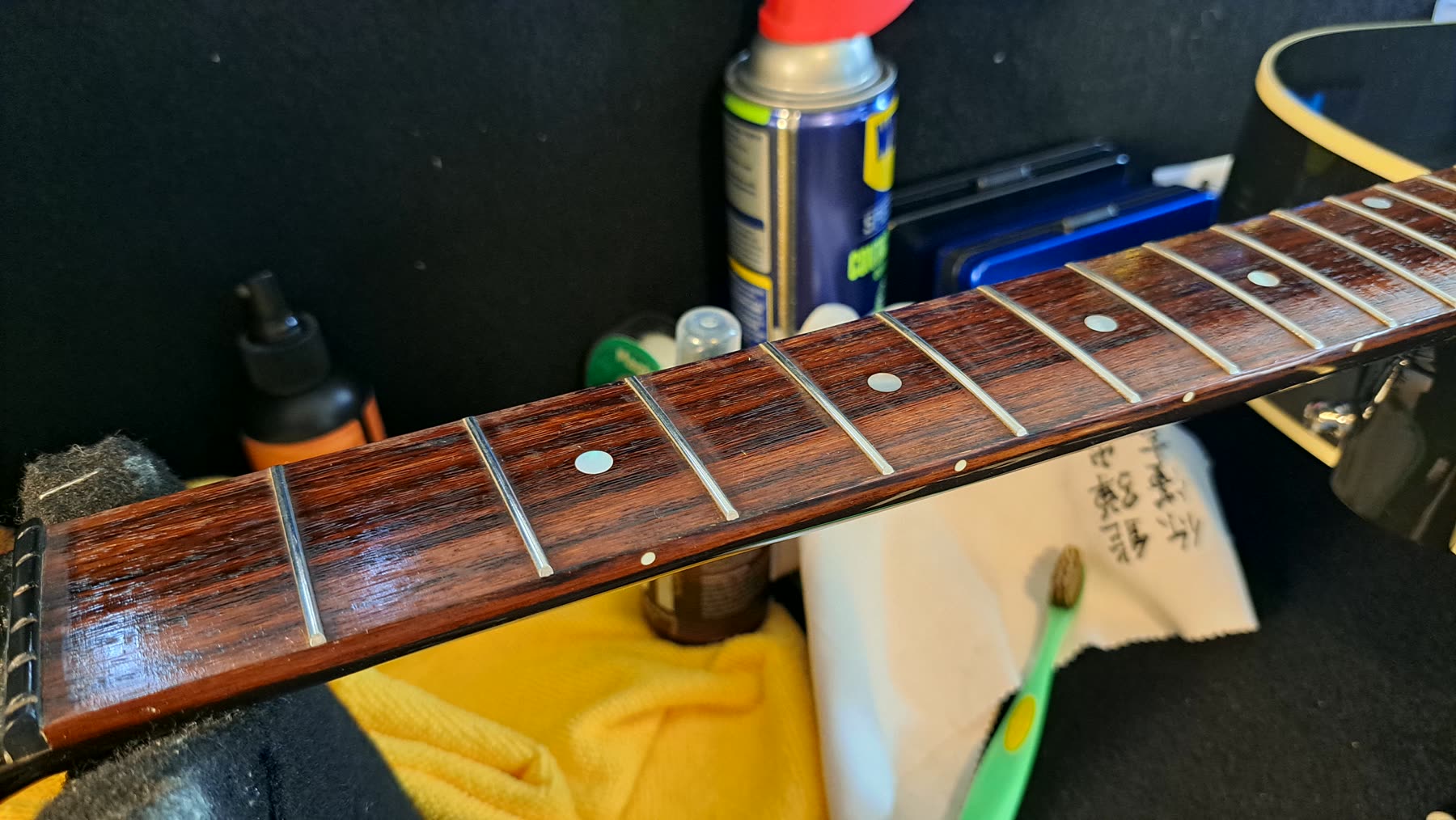
| Sharp fret ends sticking out | Fretboard shrinks; the metal frets don't | Humidify; fret end dressing ($60) |
| Lower action, new fret buzz | Top and neck shift as they dry | Humidify; seasonal setup |
| Top sinking in front of the bridge | Top shrinks and drops | Humidify; have it checked |
| Cracks in the top, back or sides | Wood shrinks until it splits | Professional crack repair |
| Pale, dry-looking fretboard | Unfinished board has lost moisture | Humidify; condition the fretboard |
What happens when a guitar gets too humid?
- Action rises as the top swells and the neck gains relief.
- The top bulges behind the bridge more than usual.
- The sound gets dull or muffled.
- Glue joints can weaken. Combined with heat, this is a common cause of a lifting bridge.
Over-humidifying is a real problem too. More isn't better. Aim for the range, not the maximum.
How do you protect a guitar from dry air?
- Keep it in its case when you're not playing it. A case is a small space that's easy to keep stable.
- Use a humidifier made for guitars, either a soundhole humidifier or a case humidifier. Two-way humidity packs add or absorb moisture as needed.
- Put a hygrometer in the case so you're measuring, not guessing.
- Keep guitars away from heat sources: vents, radiators, wood stoves and sunny windows.
- If you keep guitars on the wall, run a room humidifier and measure the room.
What should you do if your guitar cracks?
- Don't glue it yourself. Super glue and wood filler can lock the crack open and stain the wood.
- Loosen the strings a little if the crack is near the bridge.
- Put the guitar in its case with a humidifier and let it rehydrate slowly. Many dry cracks close up partway on their own.
- Bring it in. Most cracks are glued and reinforced from inside with small cleats. Structural repairs start at $200 at our shop.
See why quick crack fixes backfire in our list of DIY repairs that go wrong.
Does temperature matter too?
Yes. Heat softens glue, which is why bridges tend to lift in hot cars and trunks. Fast temperature changes can crack lacquer finishes, called "finish checking." In winter, let a cold case sit and come up to room temperature before you open it.
Frequently asked questions
What humidity should a guitar be kept at?
Around 45 to 55 percent relative humidity is the range most guitar makers recommend, especially for solid-wood acoustic guitars. Short dips are usually fine; it's long periods of very dry or very humid air, and fast changes, that cause damage.
Do electric guitars need a humidifier?
Electric guitars are much less sensitive because the bodies are usually solid and sealed, but the neck and fretboard still move. Dry air causes sharp fret ends and relief changes on electrics too. Most electric players don't need a humidifier but benefit from a seasonal setup.
How do I know if my guitar is too dry?
Common signs include fret ends sticking out past the edge of the fretboard, lower action and new fret buzz, the top sinking in front of the bridge, a fretboard that looks pale or shrunken, and in severe cases cracks in the top, back or sides.
Can a cracked guitar be fixed?
Most cracks can be repaired. The crack is usually closed by bringing the guitar back to normal humidity, then glued and reinforced from inside with small cleats. Don't fill it with super glue or wood filler, because that can lock the crack open and stain the wood.
Is it bad to leave a guitar in the car?
Yes. Cars get very hot in summer and very cold in winter. Heat can soften glue and let bridges lift. Moving a cold guitar into a warm room too fast can crack lacquer finishes, so let the case come to room temperature before opening it.