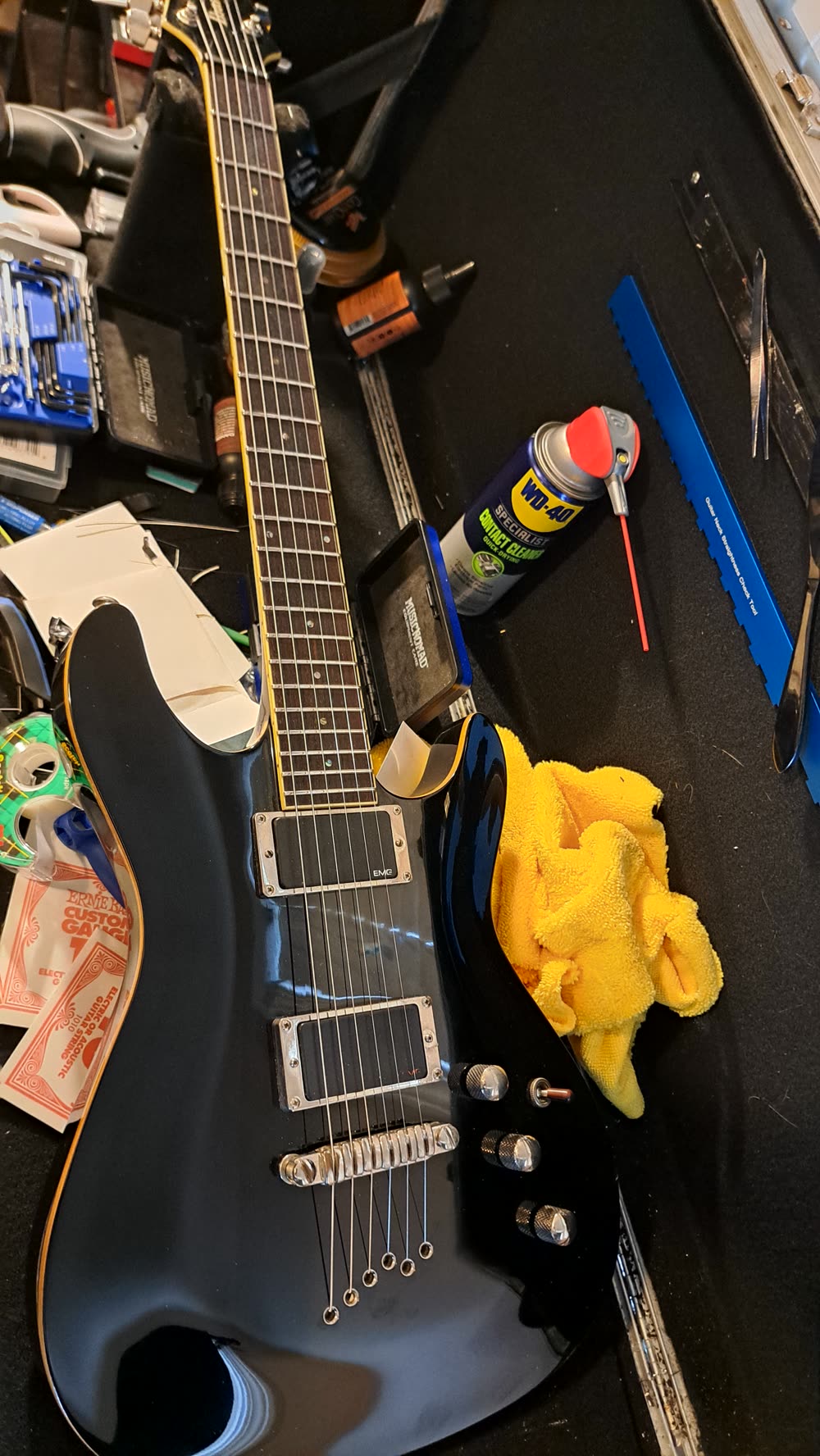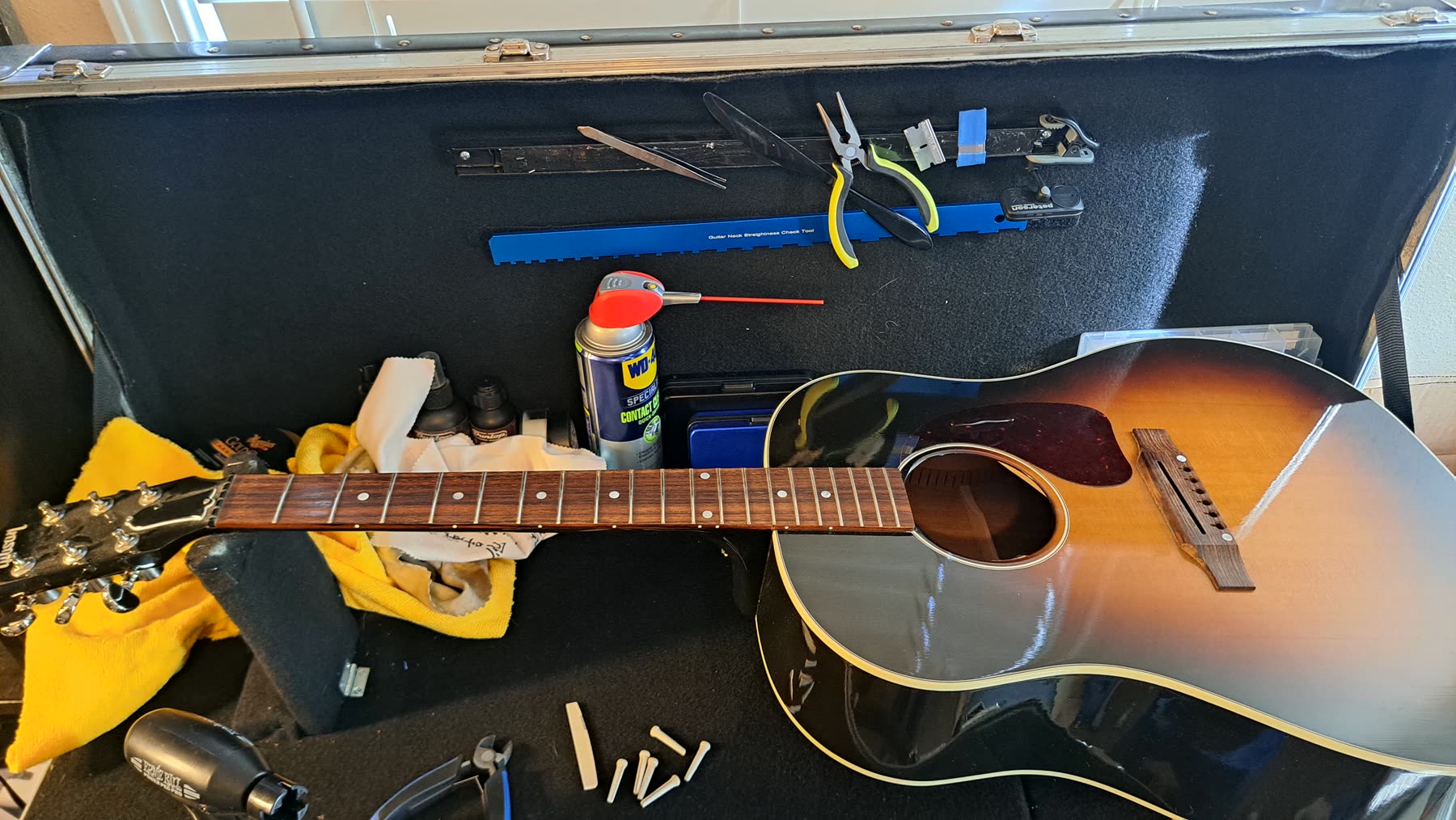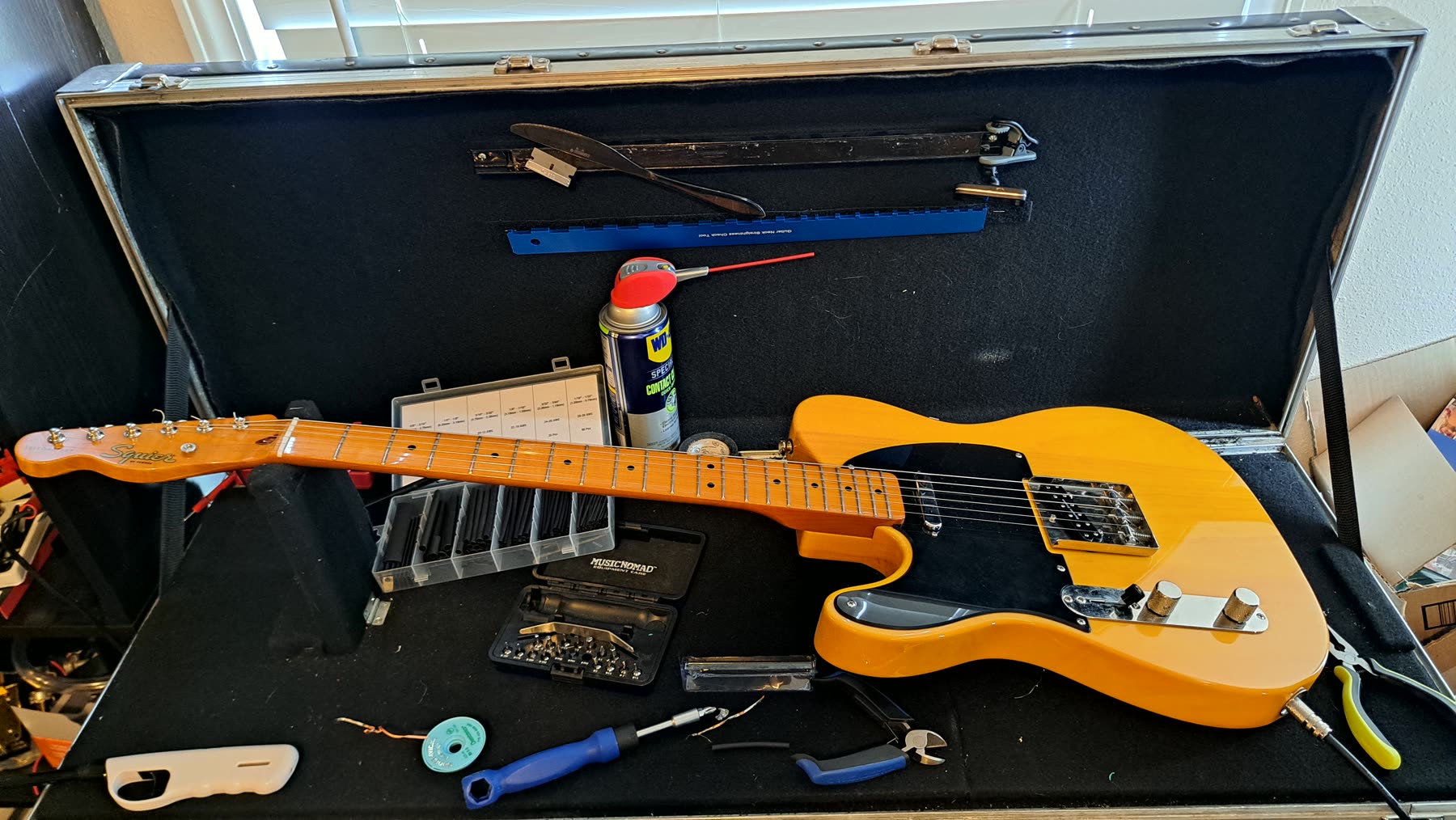
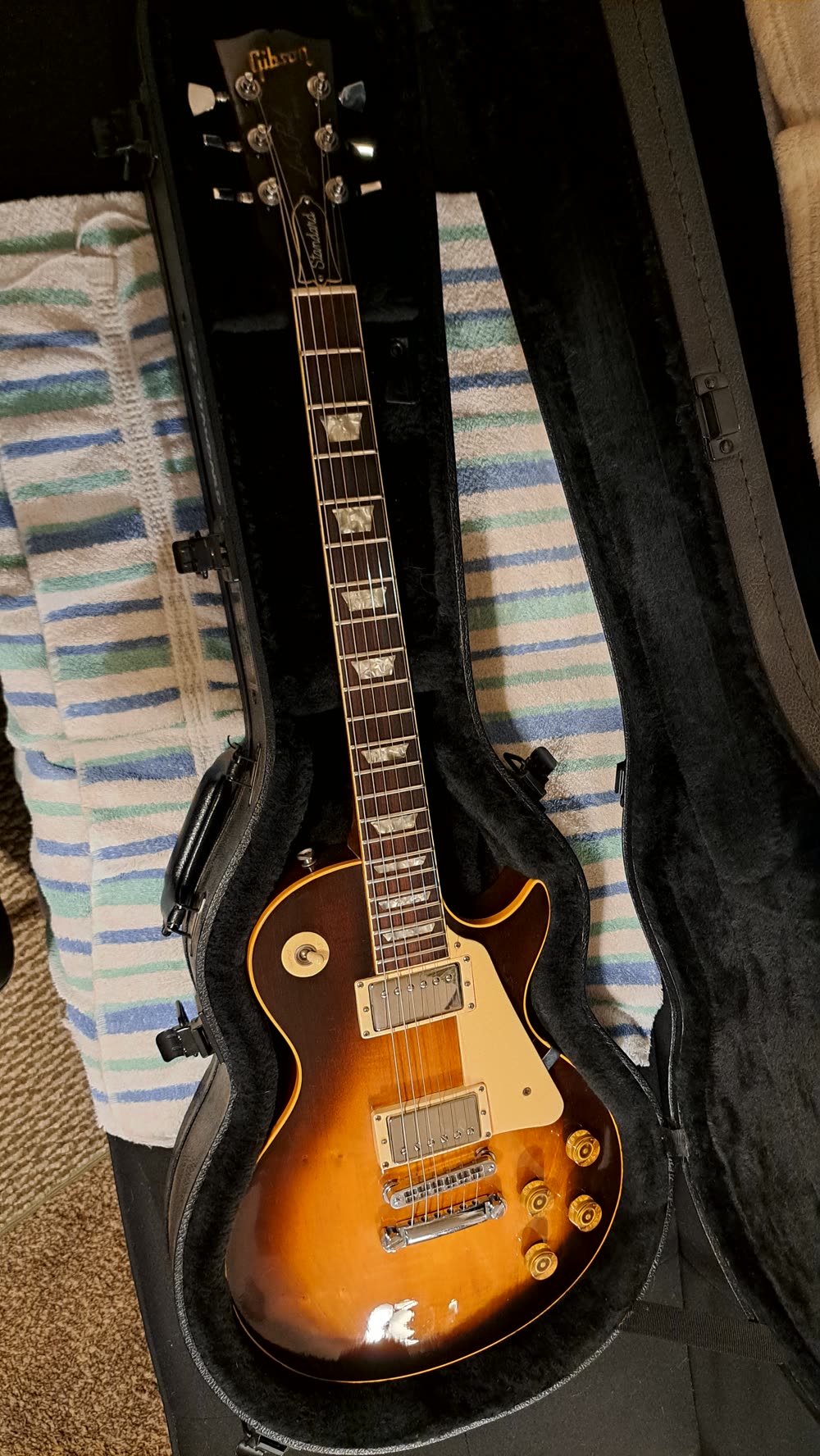
Every guitar on a repair bench carries a few hundred years of design decisions. Knowing that history explains a lot: why old guitars need neck resets, why repair shops care so much about which glue you use, and why a truss rod is one of the most important parts of your guitar.
What does luthier mean?
A luthier is someone who builds and repairs stringed instruments, such as guitars, basses, violins and mandolins. The word is French and comes from luth, meaning lute. The lute was one of the most popular instruments in Renaissance Europe, and the craftsmen who made it gave their name to the whole trade.
A short timeline of the guitar
| Era | What happened | Why it matters for repair |
|---|---|---|
| 1500s–1600s | Lutes, vihuelas and early guitars with paired "courses" of strings | Light, gut-strung instruments built with reversible animal glues |
| Late 1700s–early 1800s | Six single strings become the standard guitar layout | The basic six-string design we still repair today |
| Mid-to-late 1800s | Antonio de Torres (1817–1892) defines the modern classical guitar: larger body, refined fan bracing | The template for nearly every classical guitar since |
| 1833 onward | C.F. Martin emigrates from Germany to New York, later settling in Nazareth, Pennsylvania. X-bracing becomes a Martin hallmark | X-bracing later proved strong enough for steel strings |
| 1890s–1902 | Orville Gibson builds carved-top instruments; the Gibson company forms in 1902 | Archtop construction and new neck designs |
| 1921 | Gibson's Thaddeus McHugh files a patent for an adjustable truss rod | Neck relief becomes adjustable instead of fixed |
| 1930s | Magnetic pickups arrive (Rickenbacker's "Frying Pan" lap steel; Gibson ES-150 in 1936) | Electronics become part of guitar repair |
| 1950–1954 | Fender's solid-body Esquire, Broadcaster and Telecaster, the Gibson Les Paul (1952) and the Fender Stratocaster (1954) | Bolt-on necks and modular parts made repairs and swaps far easier |
| Today | Mass production, CNC machining and computer-guided fret work | Repair is still mostly hand work, measurement and judgment |
Why was Antonio de Torres so important?
Torres, a Spanish guitar maker, didn't invent the guitar. But he settled its modern form. He enlarged the body and refined the fan-shaped pattern of braces under the top. That balanced strength with a responsive, resonant sound. Classical guitars today still follow his basic layout.
How did C.F. Martin shape the steel-string acoustic?
Christian Frederick Martin trained in Europe and emigrated to New York in 1833, later moving his workshop to Nazareth, Pennsylvania. His company is closely associated with X-bracing, a pattern of crossed braces under the top. When steel strings took over in the early 20th century, X-bracing turned out to be strong enough to handle the extra tension. It's still the standard bracing on most steel-string acoustics.
Why was the truss rod such a big deal?
Strings pull a neck forward, and steel strings pull much harder than gut. Before the adjustable truss rod, makers relied on thick necks, hardwood or fixed metal bars. Gibson's Thaddeus McHugh filed a patent for an adjustable rod in 1921. It let players and repair techs fine-tune neck relief. Low, comfortable action across a slim neck became possible. Our truss rod guide covers how to adjust one safely.
How did electric guitars change repair?
Once pickups arrived in the 1930s, repair meant soldering irons as well as chisels. Leo Fender's solid-body guitars of the early 1950s were designed for production and service. The neck bolts on, and the electronics mount on a pickguard or control plate. That made it easy to swap necks, pickups and wiring, and modern setup and electronics work grew out of that design. See common guitar electronics problems.
Why do luthiers care so much about glue?
Traditional luthiers used hide glue, made from animal collagen. It bonds hard and transmits vibration well. Crucially, it's reversible: heat and moisture release it. That's why a well-built old guitar can have its bridge removed, its braces reglued or its neck reset decades later.
It's also why repair shops wince at super glue and epoxy in the wrong places. Those glues aren't easily reversed, and they turn a routine repair into a much bigger one. More on that in DIY repairs that go wrong.
Why do old acoustic guitars need neck resets?
Over decades, string tension slowly pulls the neck forward and the top up behind the bridge. The action rises until the saddle can't be lowered any further. On guitars with a glued neck joint, a luthier can release the joint, reset the neck angle and reglue it. That's only possible because the guitar was built to come apart.
What's the difference between a luthier and a guitar tech?
Traditionally, a luthier builds instruments and does structural work: cracks, braces, neck resets and refrets. A guitar tech focuses on setups, maintenance, electronics and keeping instruments playable, often for working musicians. Most modern repair shops, including ours in Spokane, do a bit of both.
Frequently asked questions
What does luthier mean?
A luthier is a maker and repairer of stringed instruments such as guitars, violins, mandolins and basses. The word comes from French, from 'luth,' meaning lute, one of the most common stringed instruments in Renaissance Europe.
How do you pronounce luthier?
In American English it's most commonly pronounced LOO-tee-er. You'll also hear LOO-thee-er. Both are understood in the guitar world.
What is the difference between a luthier and a guitar tech?
Traditionally a luthier builds instruments and handles structural repairs like cracks, neck resets and refrets, while a guitar tech focuses on setups, maintenance, electronics and keeping instruments working, often for touring players. In practice many repair shops do both.
Who invented the modern guitar?
No single person invented it, but Spanish luthier Antonio de Torres is widely credited with defining the modern classical guitar in the mid-1800s, with a larger body and refined fan bracing. The steel-string acoustic was shaped largely by American makers like C.F. Martin, and the solid-body electric by Leo Fender, Les Paul and Gibson around 1950 to 1952.
Why do old acoustic guitars need neck resets?
Decades of string tension slowly pull the neck forward and the top up, so the action rises and can't be lowered enough at the saddle. On guitars with a glued dovetail neck joint, a luthier can steam or heat the joint apart, reset the neck angle and reglue it, which is possible because traditional glues are reversible.